
Rice Cooker Types & Technology Guide: Basic, MICOM, IH, Pressure And Smart
Choosing between a basic electric cooker, MICOM, fuzzy logic, induction heating, pressure, and smart controls is easier when each label is tied to a real cooking function. This guide separates heat source from control logic so technology can be matched to rice type, program flexibility, maintenance, and budget.
On BuyRiceCookersOnline, rice cooker types range from basic electric and MICOM/fuzzy models to induction-heating and pressure designs. That makes heat source, control logic, capacity and maintenance useful comparison layers for products that are actually represented in the catalog.
For more detail on this topic, use fuzzy logic vs induction rice cooker comparison.
Move From The Broad Choice To The Exact Model
Understand the system first.
Compare the practical tradeoff.
Finish with model-specific checks.
How Rice Cooker Heating And Control Systems Differ
Start With The Way Heat Is Delivered And Adjusted
Rice cookers can look similar on a countertop while using very different control systems. The important distinction is not the number of menu buttons; it is how the appliance senses temperature, changes heat during the cooking cycle, and manages the move from active cooking to keep-warm.
A basic electric cooker generally relies on a straightforward heat-and-switch cycle. MICOM and fuzzy-logic models add electronic control that can adjust time or heat according to programmed logic. Induction models change how heat reaches the inner vessel, while pressure models add a sealed pressure stage. Smart and multi-function cookers layer scheduling, extra modes, or connected controls on top of those fundamentals.
A useful way to read technology labels is to separate the heat source from the control system. A cooker can be MICOM-controlled without using induction, and an induction model may add pressure or other programs on top. That distinction prevents shoppers from treating every premium-sounding label as if it describes the same engineering change.
Basic Electric Rice Cookers
Best Understood As Simple, Direct-Purpose Appliances
Basic electric rice cookers are a strong fit when the main goal is straightforward white-rice cooking with minimal setup. They usually have fewer controls, fewer removable components, and a shorter learning curve than more advanced models.
The tradeoff is flexibility. A simple cooker may not provide dedicated brown-rice, porridge, mixed-grain, or texture programs. Compare minimum and maximum batch guidance, keep-warm behavior, inner-pot design, and cleaning access instead of treating a lower feature count as a lower-quality choice.
Basic electric models are still a sensible choice when the routine is simple white rice and predictable batch sizes. Their value is usually the short learning curve, fewer removable pieces, and direct operation. Before buying, check minimum batch guidance and keep-warm behavior, because those details can matter more in daily use than the absence of advanced menus.
For the next relevant route, return to the main rice cooker buying guide.
Fuzzy Logic And MICOM Rice Cookers
Electronic Control Can Add More Programmed Flexibility
MICOM refers to microcomputer-controlled operation. Fuzzy-logic systems use programmed decision rules to adjust parts of the cooking cycle when conditions vary. These technologies are most useful when a household cooks several rice types or wants more preset control than a one-touch cooker provides.
The BuyRiceCookersOnline catalog includes MICOM models from brands such as Zojirushi, Tiger, and Cuckoo. Compare the models themselves—program set, capacity, pot construction, lid cleaning, and control clarity still matter after the technology label is understood.
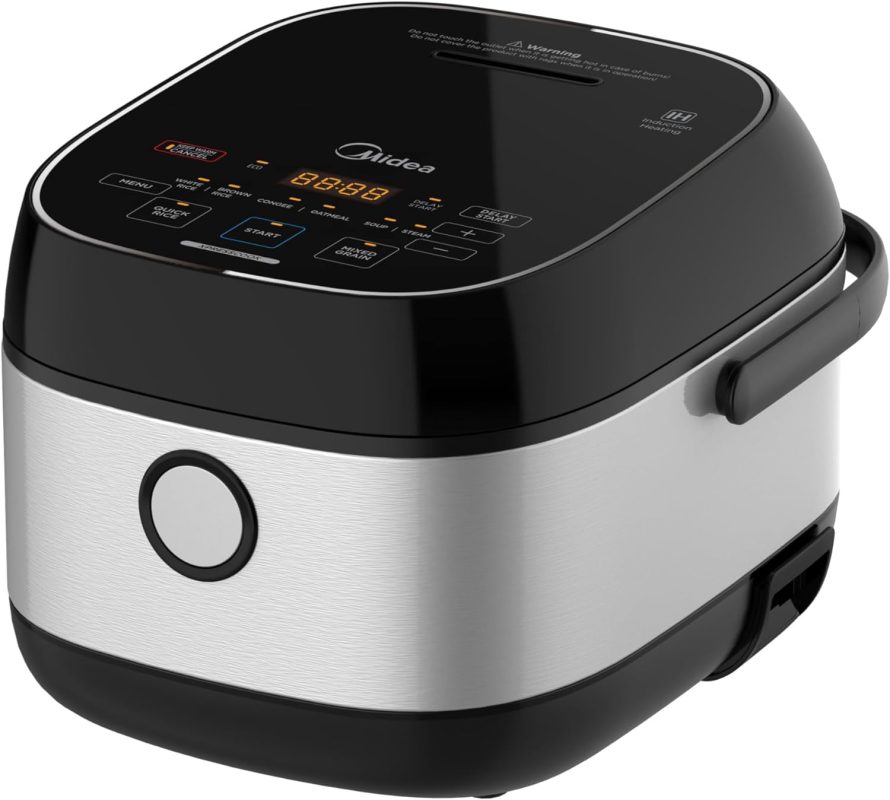
MICOM and fuzzy-logic models earn their value when the household cooks more than one rice type or wants a programmed cycle that can adjust timing and heat. The catalog example Midea Rice Cooker 6-Cup Uncooked, Induction Heating & Fuzzy Logic Technology, 24h Dealy Start & Keep Warm, Non Stick Rice Cookers, 3L combines induction heating with fuzzy-logic control, showing why shoppers should read several labels together instead of assuming one term describes the whole cooker.
Induction Heating Rice Cookers
IH Changes How The Cooking Vessel Receives Heat
Induction-heating rice cookers use an electromagnetic heating system designed to heat compatible parts of the inner vessel instead of relying only on a conventional heater beneath the pot. Depending on the model, this can support more responsive or distributed heat control.
IH is not automatically the right upgrade for every household. It belongs on the shortlist when cooking precision, advanced rice programs, and premium controls matter enough to justify additional cost, weight, or complexity. Capacity, power requirements, inner-pot care, and replacement availability still need to be checked.
Induction heating is most meaningful when precise, distributed heat is part of the reason for upgrading. It can support responsive temperature changes, but it may also come with a heavier inner pot and a higher replacement cost. Compare the whole ownership picture: vessel construction, capacity, power needs, replacement-pot availability, and cleaning access.
Pressure Rice Cookers
Pressure Adds Another Cooking Variable And Another Care Routine
Pressure rice cookers seal the cooking chamber so part of the cycle can operate under pressure. Manufacturers may use this to target particular textures or grain programs, especially in premium Korean and Japanese-style cookers.
A pressure model also adds more attention to lid parts, steam release behavior, seals, and cleaning instructions. Anyone comparing pressure and non-pressure rice cookers should weigh those maintenance requirements alongside texture options and program flexibility.
Pressure models add a sealed cooking stage, so the decision includes more than texture preference. Lid seals, steam pathways, pressure-release behavior, and cleaning instructions become part of normal ownership. A household that rarely uses pressure-specific grain programs may prefer a simpler cooker even if the pressure model appears more advanced on paper.
Smart And Multi-Function Rice Cookers
Extra Controls Are Useful Only When They Support A Real Routine
Smart cookers may add app control, scheduling, status information, or connected settings, while multi-function models can include steaming, porridge, slow-cook, soup, or grain programs. These features matter most when they replace tasks the household already performs regularly.
A deeper reference for this point is rice cooker settings guide.
A long feature list should not replace the core checks: capacity, rice programs, inner-pot material, lid design, cleaning effort, and replacement support. Connectivity also deserves its own check because app availability and supported functions can change over time.
Smart and multi-function features are useful when they replace a real step in the household routine. A delay timer, app control, steam mode, or slow-cook function has value only if it is used often enough to justify the additional controls and cleaning. Treat connectivity and menu count as convenience features, not as substitutes for capacity, pot quality, or repeatable rice results.
Rice Cooker Technology Feature-Fit Matrix
Use Technology As A Filter, Not A Ranking
The most useful technology comparison starts with the household problem. Simple daily white rice favors ease of use. Mixed grains or scheduled cooking can justify MICOM controls. Premium texture control may move IH or pressure onto the shortlist. Multi-function cooking matters when those extra modes genuinely replace other kitchen tasks.
For the next level of detail, continue with rice cooker vs multi-cooker comparison.
Use the matrix to build a shortlist rather than rank technologies from low to high. Start with the foods you cook, the batch size, and how much control you want over texture. Then verify which technology family solves that problem with the least unnecessary complexity. This approach keeps the comparison practical when two models use overlapping marketing terms.
| Primary need | Good starting technology | What to verify |
|---|---|---|
| Simple everyday rice | Basic electric | Capacity, keep-warm, cleaning |
| Several rice and grain types | MICOM / fuzzy logic | Useful presets and control clarity |
| Premium heat control | Induction heating | Pot care, power, price, replacement support |
| Pressure-specific texture programs | Pressure rice cooker | Seals, steam path, lid cleaning |
| Scheduling or broader cooking | Smart / multi-function | Which extra modes are genuinely useful |
Choose the technology family that solves the cooking problem you actually have, then compare models inside that family by capacity, controls, inner-pot care, and replacement support.