
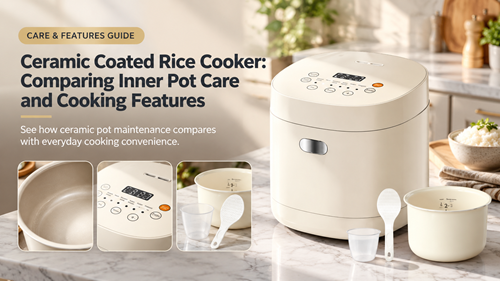
Ceramic Coated Rice Cooker is most useful when the decision starts with the normal batch, the grain or meal being cooked, available counter space, cleanup, and how often the feature will actually be used. The headline specification matters only when it improves a real household routine.
For home cooks, rice cooker shoppers, families, nonstick-pot buyers, and people comparing easy-clean inner pots, the goal is not to collect the most functions. It is to identify a cooker that delivers repeatable results without unnecessary capacity, complicated maintenance, or controls that are rarely used. Check the exact manual and current model listing whenever a setting, material, capacity, or care instruction differs from general guidance.
How To Evaluate Ceramic Coated Rice Cooker
Start with one normal use case for the Ceramic Coated Rice Cooker: the quantity cooked most often, the people served, and the time available for setup and washing. Comparing appliances without a baseline makes a larger pot or longer feature list look more useful than it may be.
Separate core cooking performance from convenience features. Heating, pot contact, sensors, pressure, and supported programs determine the cooking process; timers, displays, warming, and accessories determine how the appliance fits the day. Both matter, but they solve different problems.
Finally, compare ownership details. Check lid parts, steam paths, replacement inner pots, measuring cups, cord storage, warranty support, and the vertical space needed when the lid is open. These details often determine whether a cooker stays in regular use.
Ceramic Coated Rice Cooker Features And Buying Checks
Ceramic Coating Pot
Ceramic-style coatings can provide a smooth cooking surface, but the exact composition and care rules vary. Read the manufacturer instructions rather than assuming every ceramic coating has the same durability. Compare the exact model specification and the way this feature changes capacity, control, cleanup, or daily workflow before treating the phrase as a reason to buy.
For a concrete reference, review ceramic coating pot and compare the exact capacity, controls, materials, or instructions with the appliance you are considering. Use the linked page as one data point, not as a substitute for the current model manual.
Nonstick Rice Cooker
Nonstick performance is most useful when rice releases easily without aggressive scraping. The best ownership habit is to protect the surface with approved utensils and gentle cleaning. Compare the exact model specification and the way this feature changes capacity, control, cleanup, or daily workflow before treating the phrase as a reason to buy.
For a concrete reference, review nonstick rice cooker and compare the exact capacity, controls, materials, or instructions with the appliance you are considering. Use the linked page as one data point, not as a substitute for the current model manual.
Coating Maintenance
Maintenance starts before damage appears. Avoid abrasive pads, metal tools, and cleaners the manufacturer does not approve, and inspect the pot regularly for scratches, chips, or warping. Compare the exact model specification and the way this feature changes capacity, control, cleanup, or daily workflow before treating the phrase as a reason to buy.
For a concrete reference, review coating maintenance and compare the exact capacity, controls, materials, or instructions with the appliance you are considering. Use the linked page as one data point, not as a substitute for the current model manual.
Family Size Rice Cooker
A larger family-size pot adds surface area and weight, so handling and washing matter as much as capacity. Compare normal meal size before selecting a bigger coated bowl. Compare the exact model specification and the way this feature changes capacity, control, cleanup, or daily workflow before treating the phrase as a reason to buy.
For a concrete reference, review family size rice cooker and compare the exact capacity, controls, materials, or instructions with the appliance you are considering. Use the linked page as one data point, not as a substitute for the current model manual.
Removable Ceramic Bowl
A removable bowl is easier to wash away from the electrical base and easier to inspect for wear. Verify that replacement bowls are available for the exact model before treating removability as a long-term advantage. Compare the exact model specification and the way this feature changes capacity, control, cleanup, or daily workflow before treating the phrase as a reason to buy.
For a concrete reference, review removable ceramic bowl and compare the exact capacity, controls, materials, or instructions with the appliance you are considering. Use the linked page as one data point, not as a substitute for the current model manual.
Easy Clean Rice Pot
Easy cleaning should include the lid, steam vent, condensation collector, and pot—not only the nonstick surface. A simple pot cannot compensate for a complicated lid that is difficult to maintain. Compare the exact model specification and the way this feature changes capacity, control, cleanup, or daily workflow before treating the phrase as a reason to buy.
For a concrete reference, review easy clean rice pot and compare the exact capacity, controls, materials, or instructions with the appliance you are considering. Use the linked page as one data point, not as a substitute for the current model manual.
Ceramic Coated Rice Cooker Comparison Table
Use the table as a short decision screen before comparing prices. The exact manufacturer specification takes priority if a model defines capacity, programs, materials, or care differently.
| Decision Point | What To Compare | Why It Matters |
|---|---|---|
| Coating | Manufacturer-defined ceramic/nonstick layer | Follow exact utensil and cleaner rules |
| Pot removal | Lift-out inner bowl | Simplifies washing and inspection |
| Capacity | Normal household batch | Larger pots are heavier to handle |
| Replacement | Model-specific inner pot availability | Important after coating wear |
| Cleanup | Pot, lid, vent, condensation parts | Whole-cooker care affects daily use |
How To Test And Use Ceramic Coated Rice Cooker In A Real Routine
Before deciding that a feature is useful or that a cooker is too small, run one controlled test with the actual rice, water, measuring cup, and batch size you normally use. Keep the variables stable so the result can be compared fairly.
Pre-Purchase And Setup Checklist
- Read the coating-care section of the manual
- Use approved non-metal utensils
- Let the pot cool before washing
- Avoid abrasive pads and cleaners
- Inspect for scratches or chips
- Check replacement-pot availability
- Wash lid and steam parts as directed
- Stop using a damaged pot when the manufacturer advises replacement
After the test, note what you would change next time. Adjust one variable at a time—water, batch size, program, rest time, or accessory timing—rather than changing several settings together. This produces a repeatable household method instead of a one-off result.
Mistakes That Change Rice-Cooker Results
- Using metal utensils because the coating looks thick
- Scrubbing stuck rice with abrasive pads
- Treating ceramic coating as indestructible
- Ignoring replacement-pot availability until the surface is damaged
Manual, Food Safety, And Care Reference
For appliance-specific limits, the model manual remains the final authority. For food handling after cooking, review USDA leftovers and food-safety guidance and keep hot-holding, cooling, refrigeration, and reheating decisions separate from the cooker’s marketing claims.
Allow the appliance to cool before cleaning unless the manual says otherwise. Keep electrical bases dry, clear steam vents as directed, and use only approved utensils or cleaners on coated inner pots. Stop using damaged cords, warped pots, broken latches, or unusual electrical components until the manufacturer or a qualified service provider confirms the next step.
Choose Ceramic Coated Rice Cooker For The Routine You Actually Have
A useful Ceramic Coated Rice Cooker decision comes from matching the cooking system to a real routine. Capacity, pot design, supported programs, cleanup, counter space, and repeatable results should carry more weight than feature count by itself.
Compare the exact model, test the normal batch, and keep the manual available. A cooker that is easy to measure, start, clean, and repeat will usually deliver more value than a technically advanced model whose extra functions are rarely used.
Frequently Asked Questions
Is ceramic coating the same as bare ceramic?
Usually not. Many rice cooker pots are metal vessels with a ceramic-style nonstick coating. Check the exact product specification.
Can I use metal utensils in a ceramic-coated pot?
Only if the manufacturer explicitly allows them. Soft utensils are commonly recommended to protect the surface.
What should I do if the coating chips?
Stop using the pot if the manufacturer advises replacement and obtain the correct compatible inner pot.
Is a ceramic-coated cooker easier to clean?
The pot may release food easily, but lid and steam components still require regular cleaning.
Does a larger ceramic pot last longer?
Size does not determine coating life. Care, utensils, heat, cleaning, and manufacturing quality matter more.
