
Rice Cooker Cup Size Conversion Guide: Uncooked, Cooked, Liters And Servings
Rice cooker labels can mix rice-cup measures, cooked yield, liters, and serving language. This guide separates those measurements so a shopper can compare cooker sizes without turning one cup number into a universal serving promise.
For rice cooker cup size conversion, start by identifying what the listing is measuring. The current catalog includes compact 3-cup cookers, common 5.5-cup models, and much larger household cookers, but those labels are useful only when uncooked capacity, cooked output, and vessel volume are kept separate.
From here, return to the rice cooker size guide.
Read The Label, Normalize The Measurement, And Verify The Manual Before Converting
- 1Rice-Cooker Cup vs U.S. Measuring Cup
- 25.5-Cup Rice Cooker Capacity
- 3Verify the Cooker Manual Before Converting
Use the supplied cup and the matching inner-pot water lines when the manufacturer specifies this system.
It is larger than the common rice-cooker cup, so swapping measures can change both batch size and water level.
Finished volume changes with grain, rinsing, soaking, water, and preferred texture.
Vessel volume is not automatically the same thing as uncooked-rice capacity or a serving count.
Rice-Cooker Cup Vs U.S. Measuring Cup
The Supplied Rice Cup Is Often Smaller Than A U.S. Cup
Many rice cookers use a measuring cup of about 180 mL, while a U.S. customary cup is about 236.6 mL. That difference is large enough to affect both batch size and the water lines marked inside the pot.
Do not replace the cooker cup by appearance. If the original cup is missing, verify the manufacturer’s specified volume or replacement part before using the pot markings.
The difference between a rice-cooker cup and a U.S. cup is large enough to matter. If a recipe uses a kitchen cup while the cooker’s inner-pot line assumes the supplied rice cup, the resulting batch can be overfilled or under-watered. Keep one measurement system from rice to water so the marked lines retain their meaning.
Uncooked-To-Cooked Rice Yield
Cooked Volume Is A Range, Not A Fixed Conversion
Rice expands as it cooks, but the finished amount depends on grain type, water level, rinsing, soaking, and texture preference. A fixed “one cup becomes exactly X cups” rule is too rigid for every cooker and grain.
Use cooked-yield figures only as planning estimates. For repeat meals, record the uncooked amount that produces the household’s preferred finished portion.
Cooked yield is best treated as a planning range. Long-grain rice, short-grain rice, brown rice, and quinoa do not all expand identically, and texture preferences change the final volume. For a household that repeats the same meals, the most useful conversion is the one recorded from its own successful uncooked batch.
3-Cup Rice Cooker Capacity
Confirm Whether The 3-Cup Figure Is Uncooked
A 3-cup uncooked cooker is commonly considered a compact class. It often suits one- or two-person fresh batches, but the exact cooked yield should come from the model instructions and the grain being prepared.
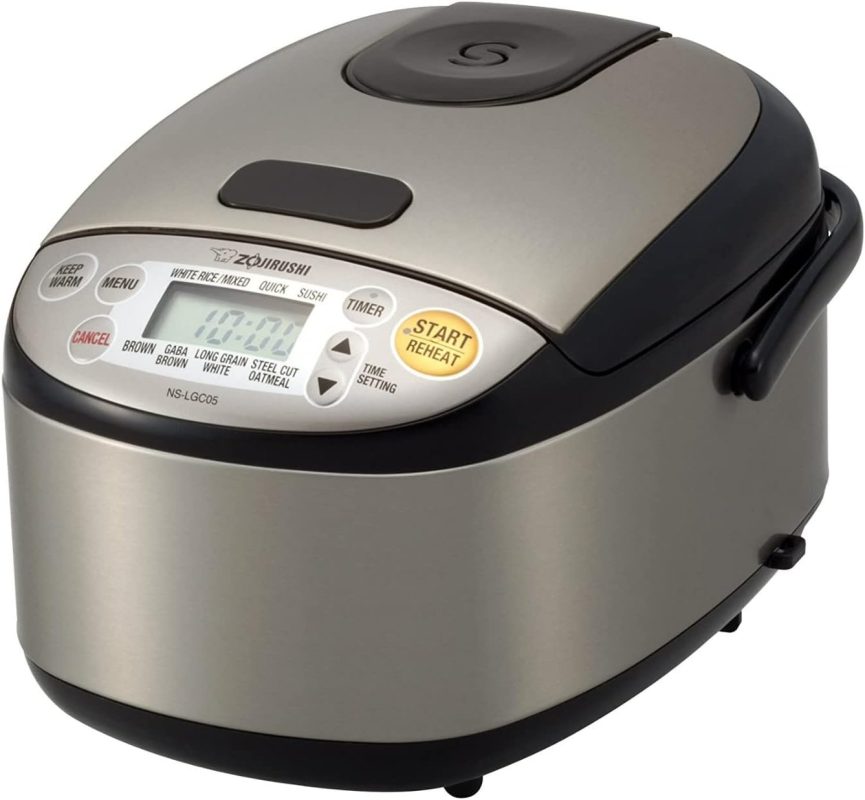
A 3-cup cooker such as Zojirushi NS-LGC05XB Micom Rice Cooker & Warmer, 3-Cups (uncooked), Stainless Black illustrates the compact end of the catalog. The label is useful for comparing maximum uncooked capacity, but it does not automatically mean three U.S. cups or a fixed number of servings. Check the model manual for its measuring cup and minimum practical batch.
For a practical model connected to this point, see Zojirushi rice cooker measuring cup.
5.5-Cup Rice Cooker Capacity
A Common Middle Capacity For Flexible Household Use
A 5.5-cup uncooked model provides more batch headroom for leftovers, meal prep, or occasional guests without moving straight to a 10-cup class. It is a useful comparison point because many MICOM and premium cookers use this size.
For another angle on this question, continue with 3-cup vs 5.5-cup comparison.
The 5.5-cup class is common because it leaves room for leftovers without becoming a very large countertop appliance. When comparing 5.5-cup models, confirm whether the number is uncooked capacity and whether the inner pot has separate water-line scales for white, brown, or mixed rice. Those markings are often more useful than a generic serving estimate.
10-Cup And Larger Rice Cooker Capacity
Large Household And Batch Use Need More Than A Serving Estimate
A 10-cup uncooked model can support substantially larger batches, but buyers should check the minimum practical batch as well as the maximum. Large capacity also affects storage, lid clearance, and the weight of the filled pot.
Ten-cup and larger models make sense when large batches are routine. The comparison should include minimum batch guidance, pot weight, counter depth, lid-open clearance, and storage. A cooker chosen for one annual gathering may be less convenient than a smaller everyday model plus a second batch when guests arrive.
For another angle on this question, continue with 5.5-cup vs 10-cup comparison.
Liters, Quarts And Pot Volume
Container Volume Does Not Always Equal Rice Capacity
A listing may show liters for the inner vessel while also showing a separate rice-cup capacity. Those numbers describe different things and should not be converted as if they were interchangeable serving counts.
For more products with this feature, browse rice cooker capacity.
Liters and quarts usually describe vessel volume, not the exact amount of uncooked rice that can be prepared. A 3-liter pot should not be converted directly into rice-cup capacity unless the manufacturer makes that relationship explicit. Treat vessel volume as a size descriptor and rice-cup capacity as a separate cooking limit.
Verify The Cooker Manual Before Converting
Use One Measurement System From Start To Finish
The safest conversion process starts with the manufacturer’s cup definition, water lines, and maximum fill. Once those are clear, liters and serving estimates can be used for planning without changing the cooking measurement system.
Before converting any label, write down four items: the manufacturer’s cup volume, whether the stated capacity is cooked or uncooked, the inner-pot fill line being used, and the grain type. Once those are known, serving estimates and liter comparisons become much more useful without overriding the cooker’s own measurement system.
Use conversions to understand labels, not to override the manufacturer’s measuring cup and fill lines. The cooker manual remains the final reference for maximum and minimum batch sizes.