
Rice Cooker Size & Capacity Guide: Cups, Liters and Household Fit
Rice cooker size guide decisions are easier when the cup label is matched to the way you actually cook. This guide explains uncooked versus cooked capacity, rice-cooker measuring cups, household batch patterns, and the counter space a cooker needs before you compare features.
BuyRiceCookersOnline includes compact 2- and 3-cup cookers, flexible 5- to 6-cup models, and larger household options. Capacity is therefore a useful first filter, but it should not be treated as a fixed “cups per person” formula.
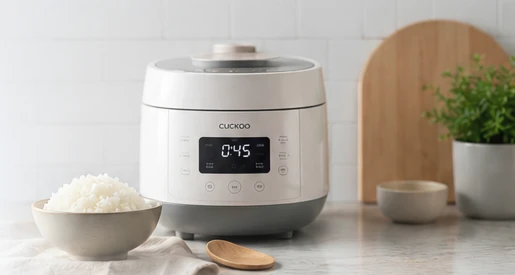
Match the Capacity Class to Your Normal Cooking Routine
A practical starting range for one or two people, smaller kitchens, and frequent fresh batches.
Useful when leftovers, meal prep, or occasional larger meals are part of the normal routine.
Better suited to repeated larger meals, batch preparation, or households that serve rice in volume.
These are practical comparison classes, not universal serving promises. Always confirm whether a manufacturer states cooked capacity, uncooked capacity, or total pot volume.
Rice Cooker Cup vs Standard Measuring Cup
Use the measuring system supplied with the cooker
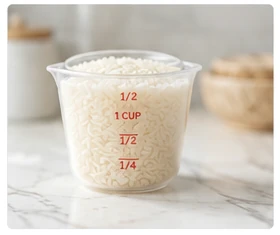
A rice cooker capacity label can be confusing because the measuring cup supplied with the appliance may not match a standard U.S. kitchen measuring cup. A common rice-cooker measure is around 180 mL, but buyers should follow the exact instructions supplied with the model rather than assume every cooker uses the same convention.
The safest approach is to treat the included rice cup and inner-pot water markings as one system. If the pot is calibrated for that cup, switching to another measure can change the rice-to-water relationship and make the capacity label harder to interpret.
Useful check: when comparing two models, confirm how each manufacturer defines its cup capacity and whether the stated number refers to uncooked rice, cooked rice, or both.
A deeper reference for this point is 3-cup vs 5.5-cup rice cooker comparison.
Cooked vs Uncooked Rice Cooker Capacity
Compare like with like before deciding which cooker is larger
Rice cooker listings can use different capacity language. Some lead with uncooked capacity, some add cooked output, and others emphasize pot volume in liters. Current BuyRiceCookersOnline examples include the CUCKOO CR-0375F at 3 cups uncooked and the Tiger JAX-T10U-K at 5.5 cups uncooked. Those two are easier to compare because the listings use the same uncooked-capacity convention.
For the next level of detail, continue with rice cooker cup size conversion guide.
Cooked yield is not a fixed multiplier for every grain. Rice variety, rinsing, soaking, water quantity, and preferred texture can all affect final volume. A “10 cups cooked” label should therefore not be converted into a rigid number of people without checking the context.
For more detail on this topic, use 5.5-cup vs 10-cup rice cooker comparison.
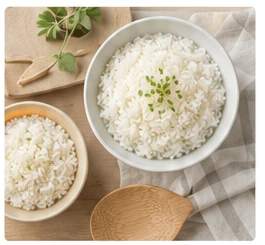
The same number can describe very different batch sizes depending on how the listing is written.
Pot volume alone does not define finished rice yield or the manufacturer’s cup system.
Paired numbers often describe two stages of the same batch rather than two different cooker sizes.
Appetite, side dishes, rice type, and planned leftovers vary by household.
Rice Cooker Size Guide for 1–2 People
Choose a compact capacity when small fresh batches are your normal routine
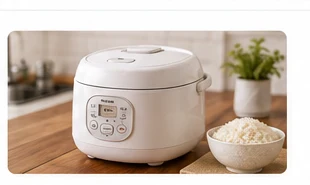
For one or two people, a compact rice cooker often makes the most sense when rice is cooked fresh and leftovers are limited. The catalog includes 2-cup and 3-cup formats as well as compact models with MICOM or fuzzy-logic controls, so choosing a smaller capacity does not automatically mean choosing basic technology.
A 3-cup class is a practical starting point when counter space matters and the household rarely cooks more than one meal at a time. If rice is regularly prepared for packed lunches, weekly meal prep, or visitors, moving into a 5- to 6-cup class can provide more useful headroom without jumping straight into a large cooker.
Rice Cooker Size for Small Families and Everyday Meals
Why the 5- to 6-cup range is a practical middle class
The 5- to 6-cup uncooked range is useful when a household wants flexibility without moving into an oversized appliance. The Tiger JAX-T10U-K is listed at 5.5 cups uncooked and combines MICOM rice cooking with steaming and slow-cooker functions. The catalog also contains 6-cup models with different control systems and menu sets.
Capacity should narrow the shortlist, not complete it. Once the size range is right, compare actual product dimensions, cooking programs, inner-pot material, cleaning design, included accessories, and replacement-part availability.
Consider this middle range when: everyday portions are moderate, but extra rice for leftovers, meal prep, or occasional shared meals is a regular part of the routine.
Large Rice Cooker Capacity for Families and Batch Cooking
Size up when larger batches are routine rather than occasional
Large rice cookers make the most sense when bigger batches are prepared repeatedly. BuyRiceCookersOnline includes 8-cup and 10-cup household models, showing that the large-capacity range can include straightforward cookers as well as feature-rich MICOM or pressure designs.
Do not choose the largest capacity simply for “future proofing.” A better decision is based on your normal batch, how often extra portions are genuinely needed, and whether the larger body will be convenient to use, clean, and store. Commercial-style cookers should be evaluated separately according to their own operating instructions and intended use.
Rice Cooker Dimensions, Counter Space and Lid Clearance
Check the appliance footprint after choosing the capacity class
Capacity is only useful if the cooker fits the kitchen. After narrowing the cup range, compare the actual width, depth, closed height, and lid-open height of the models on your shortlist. Also leave the steam and ventilation clearance specified by the manufacturer.
Width and depth: allow space for the cooker body, controls, handle access, and cord routing.
Lid clearance: measure the appliance with the lid fully open, not only when closed.
Steam path: avoid placing the vent directly beneath surfaces that conflict with the manufacturer’s clearance guidance.
Storage route: if the cooker will be stored after use, make sure the shelf and carrying path are practical for its size and weight.

Choose Capacity First, Then Compare the Features That Matter
A useful rice cooker size guide should reduce the shortlist, not make the entire buying decision. Start with your normal uncooked batch, add only the headroom you genuinely use, confirm how the manufacturer defines its cup measurement, and check the appliance dimensions. Once the capacity class fits, compare technology, inner-pot material, cleaning design, accessories, and replacement support.
You can also return to the main rice cooker buying guide.