
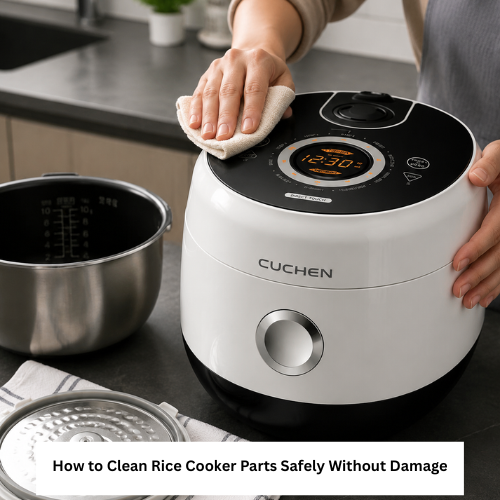
If you are searching for how to clean rice cooker parts without scratching the pot or wetting the electrical base, start by unplugging the appliance and letting it cool completely. Rice, starch, condensation, and food residue can collect in the inner pot, lid, steam vent, heating plate, and removable accessories after normal use.
Regular rice cooker cleaning helps reduce odors, sticky buildup, uneven heating, and premature wear. The safest method depends on whether the cooker has a nonstick bowl, stainless steel inner pot, ceramic coating, removable lid, fixed lid, steam cap, condensation collector, or auto-clean setting. Always follow the product manual when its instructions differ from general guidance.
Safety Steps Before Rice Cooker Cleaning
Unplug the rice cooker before removing parts or wiping the base. Do not rely only on the cook or warm switch being off.
Wait until the inner pot, lid, heating plate, and steam parts are cool enough to touch. Hot condensation can remain inside a lid or steam cap even after cooking has stopped.
Before cleaning:
- Remove the power cord from the outlet.
- Detach a removable cord from the cooker when the manual allows it.
- Move the appliance away from the sink.
- Wash and dry your hands.
- Remove the inner pot and loose accessories.
- Keep water away from the plug, control panel, heating base, and electrical contacts.
- Do not open a pressure-style lid until pressure has fully released according to the manual.
- Keep children away from hot or disassembled parts.
Never immerse the electrical base in water. Do not rinse it under a faucet or place it in a dishwasher.
| Rice cooker part | General cleaning approach | What to avoid | What to verify |
| Removable inner pot | Warm water, mild dish soap, and a soft sponge | Metal scrubbers and harsh abrasives | Coating type and dishwasher guidance |
| Stainless steel pot | Mild soap and nonabrasive cleaning | Steel wool unless specifically approved | Finish, soaking limits, and dishwasher use |
| Ceramic-coated pot | Soft sponge and gentle soaking | Scraping and sudden temperature changes | Coating condition and care instructions |
| Removable lid | Hand wash or dishwasher only when permitted | Reassembly while damp | Seal, steam valve, and dishwasher status |
| Fixed lid | Wipe with a damp cloth and clean accessible parts | Pouring water into the hinge or body | Whether the inner lid detaches |
How to Clean Rice Cooker Parts Step by Step
Unplug and Cool the Appliance
After serving the rice, switch off the cooker and unplug it. Let it cool naturally.
Do not add cold water to a very hot inner pot. Sudden temperature change may warp metal or damage ceramic and nonstick coatings.
Remove the Inner Pot and Accessories
Take out the inner pot, rice paddle, measuring cup, steaming tray, condensation collector, and any removable lid parts.
Place small pieces in a bowl or tray so they are not lost. Take a photograph before disassembling a steam cap or seal when the manual does not clearly show the orientation.
A rice cooker with a removable non-stick bowl is easier to wash outside the base, but the bowl should still be cleaned with a soft sponge and the method stated in its manual.
Soak Stuck Rice Gently
Fill the cooled inner pot with warm water and a small amount of mild dish soap. Let it sit long enough to soften dried starch or rice.
Use a soft sponge, cloth, or nonabrasive brush. Do not use a knife, fork, metal spoon, or scouring pad to lift stuck food.
If residue remains, repeat the soak instead of increasing scraping pressure.
Wash the Inner Pot
Wash the inside, outside, rim, and bottom of the pot. Starch on the outer base can interfere with full contact against the heating plate.
Rinse away all soap. Check the bottom for grit or dried grains before returning it to the cooker.
Dry the pot fully with a soft towel or allow it to air dry upside down. Do not reinstall a wet pot.
Nonstick Rice Cooker Care
Nonstick rice cooker care requires soft tools and moderate cleaning pressure. Scratches can make food stick more easily and may expose the material below the coating.
Use the supplied rice paddle or another utensil approved for nonstick surfaces. Avoid metal spoons, whisks, and sharp serving tools.
A ceramic non-stick inner cooking pot needs gentle tools because chips, scratches, or sudden temperature changes can shorten its usable life.
Check the coating after cleaning. Replace the pot when the manual recommends replacement or when the surface is peeling, deeply scratched, blistered, warped, or otherwise damaged.
Do not assume every nonstick bowl is dishwasher safe. Detergent strength, water temperature, and movement inside the dishwasher can affect some finishes.
Cleaning a Stainless Steel Inner Pot
A stainless steel rice cooker inner pot may tolerate different cleaning methods than a coated bowl, so confirm whether soaking or dishwasher use is allowed.
Stainless steel can show water spots, heat tint, or starch film. Mild dish soap and a soft sponge are suitable starting points.
For persistent film, repeat a warm soak and use a cleaner specifically permitted for food-contact stainless steel. Rinse completely.
Avoid mixing cleaning chemicals. Never combine bleach with acids, ammonia, or other household cleaners.
Check whether the pot has layered construction, measurement markings, or attached parts that require special care.
Using Auto-Clean or Steam-Clean Functions
Some cookers include an auto-clean or steam-clean program. These functions may loosen residue in steam passages, but they do not replace hand washing of removable food-contact parts.
A rice cooker with an auto-clean feature may loosen residue in steam passages, but buyers must verify the exact program steps, water amount, and parts that still require manual washing.
Use only water or the cleaning solution specified by the manufacturer. Never add dish soap to an auto-clean cycle unless the manual explicitly directs it.
Steam can cause burns. Keep hands and face away from the vent while the program operates and during the cooling period.
Rice Cooker Maintenance Schedule
After Every Use
Wash the inner pot, paddle, measuring cup, and steaming tray when used. Empty the condensation collector and wipe visible residue.
Every Few Uses
Inspect the steam vent, inner lid, gasket, hinge area, heating plate, and exterior. Clean buildup before it hardens.
Monthly for Frequent Users
Check the cord, plug, lid seal, pot coating, steam cap, sensor area, and accessory condition. The exact interval depends on use.
Before Storage
Clean and dry every part. Keep the cord loosely arranged without tight bends.
Store the cooker in a dry cabinet with no heavy items pressing on the lid or control panel.
Replacement Parts and Compatibility
A replacement inner pot must match more than general capacity. Diameter, height, rim shape, base contour, coating, sensor contact, and model number can affect operation.
When a lid seal, steam cap, measuring cup, spoon, or inner pot needs replacement, browse only rice cooker parts and accessories that list the exact model or part number.
Do not use an inner pot that rocks, sits too high, blocks the lid, or leaves a gap against the heating plate.
Before ordering a replacement:
- Record the full model number.
- Check the original part number.
- Measure only when the seller requests measurements.
- Compare material and coating.
- Confirm pressure or induction compatibility.
- Check whether seals and valves are genuine or approved.
- Review installation instructions.
- Read the return policy before use.
Using an incorrect pressure cooker gasket, steam valve, or inner pot can create a safety risk.
Cleaning Features to Check Before Buying
Easy-clean design can reduce maintenance time, but marketing terms should be verified.
Useful features may include:
- Removable inner lid
- Detachable steam cap
- Removable condensation collector
- Smooth control panel
- Accessible heating plate
- Removable nonstick or stainless pot
- Dishwasher-safe accessories
- Clearly available replacement parts
- Auto-clean program
- Simple gasket removal and reinstallation
Shoppers comparing easy-clean designs can review a DASH rice cooker with a removable nonstick pot and then verify current cleaning instructions, dishwasher guidance, package contents, and return terms.
Conclusion
Once you know how to clean rice cooker parts safely, routine care becomes easier and the appliance is less likely to develop odors, sticky buildup, or poor pot contact. Unplug the cooker, protect the electrical base, use gentle tools, dry every part, and follow model-specific instructions. Buy rice cookers online helps shoppers compare cookers and replacement parts while keeping cleaning access and compatibility in focus.
FAQ
Can I Wash a Rice Cooker in the Sink?
Only removable parts should be washed in the sink when their instructions allow it. Never immerse the electrical base.
Can a Rice Cooker Inner Pot Go in the Dishwasher?
Some can, but many coated pots require hand washing. Check the manual for the exact pot.
How Do I Remove a Bad Smell From a Rice Cooker?
Clean the pot, inner lid, steam vent, gasket, and condensation collector, then rinse and dry every part completely.
Can I Use a Metal Scrubber on a Rice Cooker Pot?
Do not use one on nonstick or ceramic coatings. For stainless steel, use only tools approved by the manufacturer.
How Often Should a Rice Cooker Be Cleaned?
Clean food-contact parts after every use and inspect steam parts, the heating plate, and the exterior regularly.
