
Rice Cooker Inner Pot Compatibility Guide: Size, Model Number And Material
A replacement inner pot must fit more than a cup or quart label. Model number, diameter, height, base shape, sensor contact, coating, and pressure or induction requirements can all determine whether a pot actually seats and cooks correctly.
For replacement rice cooker inner pot compatibility, the site already carries pots advertised for specific cooker families. That is exactly why a replacement should be checked by model number, dimensions, base geometry and material instead of being chosen from cup capacity alone.
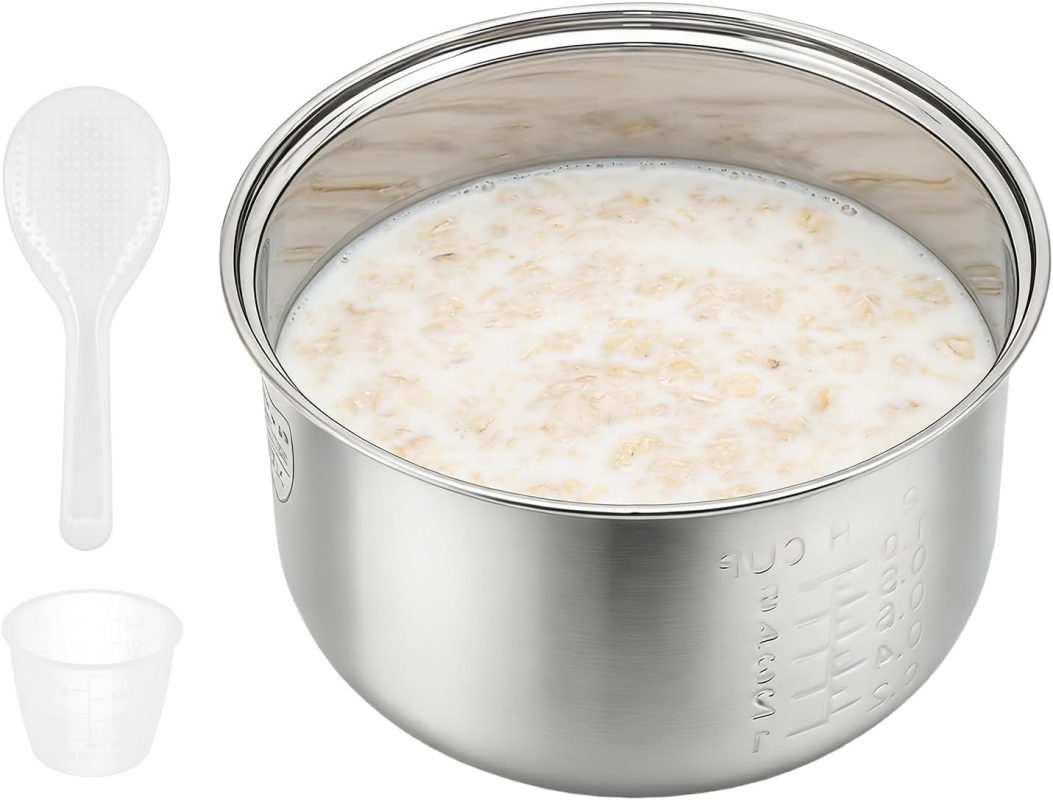
Match The Model Number, Dimensions, Base Design, And Material Before Ordering A Pot
- 1Find the Exact Rice Cooker Model Number
- 2Inner Pot Material and Coating
- 3Inner Pot Pre-Purchase Compatibility Checklist
Find The Exact Rice Cooker Model Number
Start With The Rating Label, Not The Product Nickname
Model families can contain several capacities or regional versions that look nearly identical. Record the full model code, including letters or suffixes, from the cooker label before searching for a replacement pot.
One related product option is stainless steel replacement inner pot.
When the original pot has a part number stamped or printed on it, record that as well. A part number can be more precise than a marketplace title.
The model number is the most reliable starting point because product families can share names while using different pots. Look for the rating label on the cooker body and record the full suffix. A marketplace listing that says “fits 5-cup rice cookers” is much weaker evidence than one that names the exact model or original part number.
Why Cup Or Quart Size Is Not Enough
Two 5-Cup Pots Can Have Different Geometry
Capacity does not define the base contour, rim height, wall angle, handle position, sensor contact, or lid clearance. A pot can hold a similar volume and still fail to seat correctly in another cooker.
Treat “3 cup,” “5.5 cup,” or “6 quart” as a category clue only. Compatibility needs a model or part reference.
Cup size describes cooking capacity, not the shape of the vessel. Two 5-cup pots can differ in diameter, wall taper, rim profile, sensor contact, handle cutouts, or induction construction. Treat capacity as one filter only; geometry and compatibility evidence decide whether the pot will seat and heat correctly.
Inner Pot Dimensions And Seating
Measure The Shape That Actually Touches The Cooker
Useful dimensions include rim diameter, overall height, base diameter, and any locating features that keep the pot centered. The bottom surface must sit as the cooker was designed so heat and sensors can work normally.
A pot that rocks, sits high, or prevents the lid from closing should not be forced into service.
Measure the old pot only when the model or part number cannot resolve the fit. Record rim diameter, overall height, base diameter, and any locating features, then compare the bottom shape rather than just the top opening. A pot that sits slightly high or rocks on the heater can produce poor sensor contact.
Inner Pot Material And Coating
Replacement Material Can Change Care Requirements
Nonstick-coated aluminum, stainless steel, ceramic-coated, and other inner pots can differ in weight, heat response, and cleaning instructions. Even when dimensions match, the cooker may be designed around a specific vessel construction.
A closely related comparison is covered in inner pot material comparison.
Follow manufacturer compatibility guidance before changing material, especially on induction or pressure models.
Material matters because it changes care and, in some cookers, heating compatibility. The catalog includes Stainless Steel Inner Pot Of Rice Cooker – compatible with aroma rice cooker ARC-914SBD, ARC-994SGreplacement pot., a stainless replacement marketed for specific Aroma models. That model list is more useful than the material name alone; a preferred surface does not make a pot compatible with every cooker of similar size.
The related decision guide is scratched inner pot guide.
OEM Vs Compatible Replacement Pots
A Compatible Listing Still Needs Evidence Of Fit
OEM parts offer a direct model reference when available. Third-party compatible pots can be useful, but the listing should identify the exact supported cooker models rather than relying on broad capacity language.
From here, return to the parts and accessories guide.
Check return terms when fit cannot be confirmed before purchase, and inspect the pot for shipping damage before use.
OEM parts usually offer the clearest compatibility evidence, while third-party pots need stronger verification. Check the exact model list, dimensions, material, induction or pressure suitability, and return policy. Avoid modifying a pot to make it fit, especially when the cooker relies on precise lid clearance, pressure sealing, or magnetic induction.
Inner Pot Pre-Purchase Compatibility Checklist
Verify The Part Before The Old Pot Is Discarded
- Full cooker model number and suffix
- Original pot part number if available
- Rim diameter, height and base geometry
- Material/coating approved for the model
- Induction or pressure compatibility where applicable
- Lid closure and sensor contact requirements
Before checkout, compare the new part against the old pot and the cooker label one final time. Keep the original until the replacement has been inspected for rim shape, base contact, and lid clearance. That small step makes it easier to return an incorrect part without losing the reference needed to identify the right one.
If the replacement listing provides dimensions, compare them with the original pot before relying on the product photo. Photos can hide rim thickness, base curvature, or locating tabs. For induction and pressure models, also confirm that the replacement is explicitly intended for that heating or sealing system rather than merely sharing a similar diameter.
A practical final check is to save the model label, old-pot part number, and seller compatibility statement together. If the new pot arrives and does not seat flat, closes the lid differently, or changes sensor contact, stop and return it instead of trying to adapt the cooker around the part.
The safest replacement pot is the one verified for the exact cooker model. When compatibility is uncertain, confirm dimensions, base shape, material, and heating-system requirements before buying.
Compatibility also affects long-term ownership. Before paying more for a specialized cooker, check whether the inner pot is sold separately and how clearly the manufacturer identifies replacement part numbers. A cooker with a replaceable pot and documented model fit can be easier to keep in service than one that relies on vague third-party sizing.