

Ceramic, stainless, and nonstick inner pots feel different in daily use because release, cleaning, scratch tolerance, weight, and replacement availability all vary. Material should be chosen around those practical tradeoffs rather than a single “best” label.
For rice cooker inner pot materials, the catalog includes pure ceramic pots, uncoated stainless-steel pots and conventional nonstick inner pots. That variety makes release, scratch care, cleanup and replacement availability more useful decision factors than a blanket claim that one material is always best.
For a practical model connected to this point, see Joydeem ceramic-pot rice cooker.

Compare The Routine Before Declaring A Winner
Compare pot materials around release, cleaning, wear, and replacement availability instead of treating material as a quality score.
The best material is the one whose daily care and durability fit how the household actually cooks and cleans.
Rice Cooker Inner Pot Material Basics
Material And Coating Affect Handling More Than The Cooker’s Marketing Name Suggests
Rice cooker inner pots may use aluminum with a nonstick coating, stainless steel, ceramic-coated surfaces, or other constructions. Some premium IH models use multi-layer vessels designed specifically for induction heating.
A closely related comparison is covered in inner pot compatibility guide.
Rice-cooker inner pots can be stainless steel, ceramic, coated metal, or other constructions, and the marketing name does not always reveal the full build. Start by separating the base material from the cooking surface. A ceramic-coated metal pot and a solid ceramic vessel can have different weight, care, and replacement considerations.
For the next relevant route, return to the parts and accessories guide.
Rice Release And Serving
Nonstick Surfaces Usually Make Rice Release Easier
A well-maintained nonstick or ceramic-coated pot can reduce sticking and make serving easier. Stainless steel is more tolerant of some utensils but can require more attention to water, soaking, and cleanup when rice adheres.
Nonstick surfaces usually release rice easily, especially when the batch sits on keep-warm. Stainless steel can require more attention to water, rinsing, and serving technique. Ceramic surfaces vary by construction. Compare the actual pot instructions rather than assuming one material guarantees perfect release for every rice type.
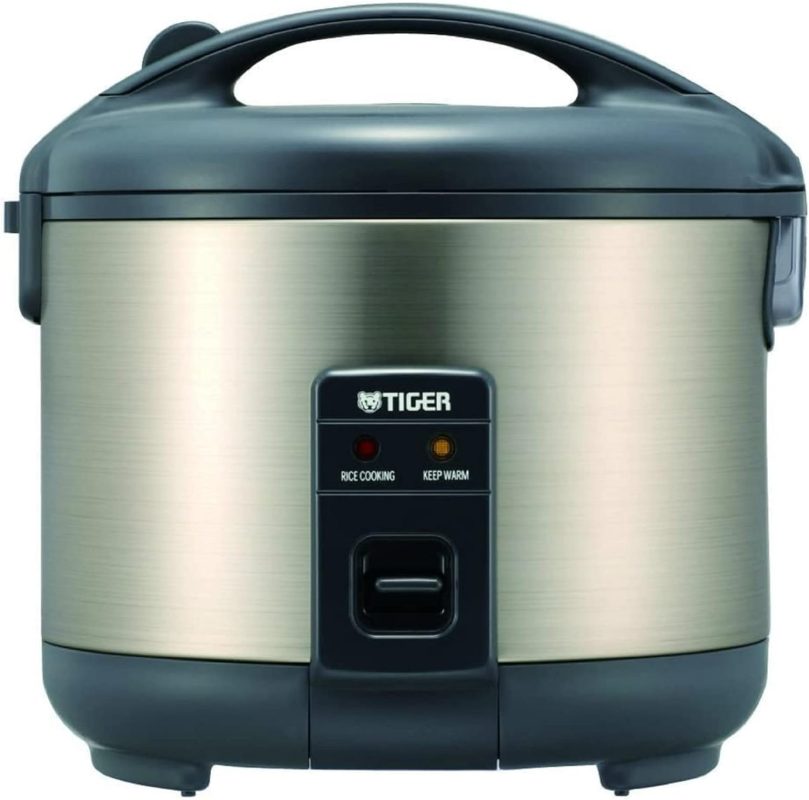
For a practical model connected to this point, see Tiger nonstick-pot rice cooker.
Cleaning And Daily Care
The Safest Cleaning Method Follows The Surface, Not Habit
Avoid abrasive pads on coated pots unless the manufacturer explicitly allows them. Stainless steel may tolerate more aggressive cleaning, but the cooker manual still governs what can be used.
Daily care should match the surface. Coated pots generally benefit from soft utensils and non-abrasive washing, while uncoated stainless steel may tolerate a different cleaning approach. The catalog examples Joydeem Ceramic Rice Cooker FD20S-W, 3 Cups Uncooked Rice Cookers with Pure Ceramic Inner Pot, 24h Dealy Start, 2L, White, Aroma Housewares Select Stainless Rice Cooker & Warmer with Uncoated Inner Pot, 6-Cup(cooked) / 1.4Qt, ARC-753SG, White, and Tiger JNP-S10U 5.5 Cup Capacity White Rice Cooker with Non-Stick Inner Pot, Spatula and Measuring Cup, Keep Warm Upto 12 hours (Stainless Steel Gray) show how different materials appear across real rice-cooker products.
Scratch And Wear Resistance
Surface Damage Has Different Consequences By Construction
Coated pots can lose release performance when deeply scratched or peeling. Stainless steel does not have a nonstick layer to peel, but it can still warp or develop deposits that affect seating and heat transfer.
Scratch resistance is not the same as damage tolerance. Cosmetic marks on uncoated stainless steel are different from peeling or exposed base material on a coated pot. With ceramic or nonstick surfaces, follow the manufacturer’s guidance when deep scratches, chips, or flaking appear instead of trying to polish or recoat the vessel.
For a practical model connected to this point, see Aroma stainless-pot rice cooker.
Replacement Availability
A Preferred Material Is Only Useful If It Fits The Exact Cooker
Do not swap pot material based only on diameter or cup size. Induction, pressure, and sensor systems can depend on specific vessel construction.
Replacement availability matters because the inner pot is a wear item on many cookers. A preferred material is not useful if the exact replacement becomes difficult to source. Check the model number, part availability, and price before buying a premium cooker whose pot has specialized induction, pressure, or sensor requirements.
Which Inner Pot Material Fits You?
Choose Based On Cleanup, Utensil Habits, And Model Compatibility
| Priority | Material to consider | Tradeoff to check |
|---|---|---|
| Easy release | Nonstick / ceramic-coated | Coating care and replacement |
| No nonstick coating | Stainless steel | More sticking/cleanup possible |
| Premium IH compatibility | Model-specific multi-layer pot | Higher replacement cost and strict fit |
Choose nonstick when easy release and simple serving are high priorities and you are comfortable using gentle utensils. Choose stainless when an uncoated surface is preferred and the cooking technique suits it. Choose ceramic when the specific model’s construction, weight, and care instructions fit the household. Compatibility always comes before material preference.
Pick the pot material whose release, cleaning, scratch tolerance, weight, and replacement options match your kitchen habits. The material alone does not determine cooker quality.
For households that cook rice several times a week, handling matters as much as material theory. Consider the weight of the pot when wet, whether rice is served directly from it, and how carefully other household members use utensils. A surface that fits the real routine is usually a better choice than one that only sounds preferable in isolation.
