
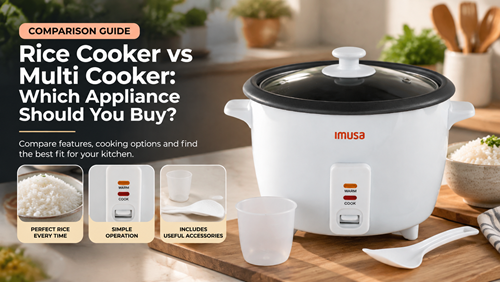

rice cooker vs multi cooker is most useful when the decision starts with real batch size, cooking habits, counter space, cleanup, and the grain or meal types used every week. A dedicated rice cooker and a multi-cooker overlap on rice, steaming, and keep-warm tasks but differ in pressure capability, program depth, pot design, cleanup, and how much versatility the owner actually uses.
For Rice cooker buyers, home cooks, busy families, kitchen appliance shoppers, and people comparing rice cooking solutions, the goal is not to collect the most functions. It is to identify the cooker that produces repeatable results without adding unnecessary capacity, difficult maintenance, or controls that are rarely used. Check the exact manual and current product listing whenever a model-specific setting or capacity differs from general guidance.
How To Evaluate Rice Cooker Vs Multi Cooker
Start with one normal use case for the rice cooker vs multi cooker: the quantity you cook most often, the people you serve, and the time you have for setup and washing. Comparing appliances without a baseline makes a larger pot or longer feature list look more useful than it may be.
Separate core cooking performance from convenience features. Heat control, pot contact, sensors, pressure, and the supported rice programs determine the cooking process; timers, displays, apps, and keep-warm controls determine how the appliance fits the day. Both matter, but they solve different problems.
Finally, compare ownership details. Check lid parts, steam paths, replacement inner pots, included measuring cups, cord storage, warranty support, and the amount of vertical space needed when the lid is open. Those details often determine whether a cooker stays in regular use.
Rice Cooker Vs Multi Cooker Features And Buying Checks
Multi Cooker Comparison
Use this term to compare the practical feature rather than treating it as a promise of better rice. Check the exact model specification and the way the feature changes capacity, control, or maintenance.
For a concrete reference, review multi cooker comparison and compare the exact capacity, controls, materials, or instructions with the appliance you are considering. Use the linked page as one data point, not as a substitute for the current model manual.
Pressure Cooker Functions
This point matters because product names often compress several design choices into one phrase. Confirm what the feature actually does, which programs use it, and whether it changes the daily workflow.
For a concrete reference, review pressure cooker functions and compare the exact capacity, controls, materials, or instructions with the appliance you are considering. Use the linked page as one data point, not as a substitute for the current model manual.
All In One Appliance
Compare the feature with the meals cooked most often. A capability that is excellent for occasional batch cooking may be unnecessary for a household that prepares one small pot of white rice at a time.
For a concrete reference, review all in one appliance and compare the exact capacity, controls, materials, or instructions with the appliance you are considering. Use the linked page as one data point, not as a substitute for the current model manual.
Kitchen Appliance Comparison
Look for a measurable benefit: easier setup, more predictable texture, better batch fit, simpler cleanup, or fewer appliances on the counter. Avoid buying only because the phrase sounds premium.
For a concrete reference, review kitchen appliance comparison and compare the exact capacity, controls, materials, or instructions with the appliance you are considering. Use the linked page as one data point, not as a substitute for the current model manual.
Cooking Versatility
Check the manual, the pot, and the control panel together. The usefulness of this feature depends on supported settings, minimum or maximum quantities, and how easily the result can be repeated.
For a concrete reference, review cooking versatility and compare the exact capacity, controls, materials, or instructions with the appliance you are considering. Use the linked page as one data point, not as a substitute for the current model manual.
Countertop Cooker
Include maintenance in the comparison. More programs or extra hardware can be worthwhile, but lids, valves, trays, coatings, and sensors may add cleaning steps or replacement costs.
For a concrete reference, review countertop cooker and compare the exact capacity, controls, materials, or instructions with the appliance you are considering. Use the linked page as one data point, not as a substitute for the current model manual.
Rice Cooker Vs Multi Cooker Comparison Table
Use the table as a short decision screen before comparing prices. The exact manufacturer specification takes priority if a model defines capacity, programs, or care differently.
| Decision Point | What To Compare | Why It Matters |
|---|---|---|
| Dedicated rice cooker | Focused grain programs | Best for frequent rice-first households |
| Pressure multi-cooker | Pressure, sauté, slow cook, rice | Broader meal range |
| Learning curve | Usually lower | Often higher on multi-cookers |
| Cleanup | Often fewer parts | Pressure lids/valves add care |
| Counter space | One focused appliance | One versatile appliance may replace several |
How To Test And Use Rice Cooker Vs Multi Cooker In A Real Routine
Before deciding that a feature is useful or that a cooker is too small, run one controlled test with the actual rice, water, measuring cup, and batch size you normally use. Keep the variables stable so the result can be compared fairly.
Pre-Purchase And Setup Checklist
- List the non-rice meals you cook weekly
- Decide whether pressure cooking is needed
- Compare pot size and shape
- Check rice-specific programs
- Compare lid and valve cleanup
- Measure counter and storage footprint
- Review learning curve and manuals
- Choose the appliance that replaces real tasks
After the test, note what you would change next time. Adjust one variable at a time—water, batch size, program, rest time, or accessory timing—rather than changing several settings together. That produces a repeatable household method instead of a one-off result.
Manual, Food Safety, And Care Reference
For appliance-specific limits, the model manual remains the final authority. For food handling after cooking, review Instant Pot Duo official function guide and keep hot-holding, cooling, refrigeration, and reheating decisions separate from the cooker’s marketing claims.
Allow the appliance to cool before cleaning unless the manual says otherwise. Keep electrical bases dry, clear steam vents as directed, and use only approved utensils or cleaners on coated inner pots. Stop using damaged cords, warped pots, broken latches, or unusual electrical components until the manufacturer or a qualified service provider confirms the next step.
Choose Rice Cooker Vs Multi Cooker For The Routine You Actually Have
A useful rice cooker vs multi cooker decision comes from matching the cooking system to a real routine. Capacity, pot design, supported programs, cleanup, counter space, and repeatable results should carry more weight than feature count by itself.
Compare the exact model, test the normal batch, and keep the manual available. A cooker that is easy to measure, start, clean, and repeat will usually deliver more value than a technically advanced model whose extra functions are rarely used.
Frequently Asked Questions
Can a multi-cooker replace a rice cooker?
It can for some households, especially when rice is only one of many tasks. Dedicated rice cookers often provide more rice-focused programs and simpler operation.
Does a rice cooker use pressure?
Most basic rice cookers do not. Some premium rice cookers use pressure, so check the exact model.
Which is easier to clean?
Dedicated rice cookers often have fewer lid and valve parts, while pressure multi-cookers can require more detailed cleaning.
Which appliance is better for small kitchens?
The better choice is the one that replaces the most real tasks without creating unused bulk on the counter.
Should I choose by number of functions?
No. Compare the functions you use weekly, rice quality expectations, learning curve, cleanup, and storage.
