
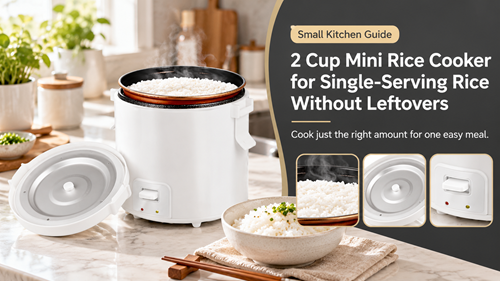
2 Cup Mini Rice Cooker is most useful when the decision starts with the normal batch, the grain or meal being cooked, available counter space, cleanup, and how often the feature will actually be used. The headline specification matters only when it improves a real household routine.
For home cooks, apartment residents, solo diners, rice cooker shoppers, and meal-prep households, the goal is not to collect the most functions. It is to identify a cooker that delivers repeatable results without unnecessary capacity, complicated maintenance, or controls that are rarely used. Check the exact manual and current model listing whenever a setting, material, capacity, or care instruction differs from general guidance.
How To Evaluate 2 Cup Mini Rice Cooker
Start with one normal use case for the 2 Cup Mini Rice Cooker: the quantity cooked most often, the people served, and the time available for setup and washing. Comparing appliances without a baseline makes a larger pot or longer feature list look more useful than it may be.
Separate core cooking performance from convenience features. Heating, pot contact, sensors, pressure, and supported programs determine the cooking process; timers, displays, warming, and accessories determine how the appliance fits the day. Both matter, but they solve different problems.
Finally, compare ownership details. Check lid parts, steam paths, replacement inner pots, measuring cups, cord storage, warranty support, and the vertical space needed when the lid is open. These details often determine whether a cooker stays in regular use.
2 Cup Mini Rice Cooker Features And Buying Checks
Compact Rice Maker
A compact cooker should save space without forcing the user to fill the pot near its maximum line. Compare exterior footprint, lid clearance, cord storage, and the space needed to remove the inner pot. Compare the exact model specification and the way this feature changes capacity, control, cleanup, or daily workflow before treating the phrase as a reason to buy.
For a concrete reference, review compact rice maker and compare the exact capacity, controls, materials, or instructions with the appliance you are considering. Use the linked page as one data point, not as a substitute for the current model manual.
Single Portion Rice Cooker
Single-serving use works best when the measuring cup and water marks are easy to repeat. Tiny batches can be less forgiving of measurement changes, so consistency matters more than headline capacity. Compare the exact model specification and the way this feature changes capacity, control, cleanup, or daily workflow before treating the phrase as a reason to buy.
For a concrete reference, review single portion rice cooker and compare the exact capacity, controls, materials, or instructions with the appliance you are considering. Use the linked page as one data point, not as a substitute for the current model manual.
Small Countertop Cooker
A small countertop appliance should leave enough room for steam to escape and for the lid to open fully. Check cabinet clearance and avoid placing the cooker directly against a wall while operating. Compare the exact model specification and the way this feature changes capacity, control, cleanup, or daily workflow before treating the phrase as a reason to buy.
For a concrete reference, review small countertop cooker and compare the exact capacity, controls, materials, or instructions with the appliance you are considering. Use the linked page as one data point, not as a substitute for the current model manual.
2 Cup Uncooked Capacity
Capacity labels can refer to uncooked rice, cooked yield, or a proprietary measuring cup. Confirm the manual before assuming that a 2-cup label equals two standard household cups. Compare the exact model specification and the way this feature changes capacity, control, cleanup, or daily workflow before treating the phrase as a reason to buy.
For a concrete reference, review 2 cup uncooked capacity and compare the exact capacity, controls, materials, or instructions with the appliance you are considering. Use the linked page as one data point, not as a substitute for the current model manual.
Travel Rice Steamer
Travel use adds voltage, plug, storage, and cleaning questions. Portability is useful only when the appliance can be safely powered, cooled, cleaned, and dried at the destination. Compare the exact model specification and the way this feature changes capacity, control, cleanup, or daily workflow before treating the phrase as a reason to buy.
For a concrete reference, review travel rice steamer and compare the exact capacity, controls, materials, or instructions with the appliance you are considering. Use the linked page as one data point, not as a substitute for the current model manual.
Removable Nonstick Pot
A removable pot makes small-cooker cleanup easier, but coating care still matters. Use the utensils and cleaning method approved by the manufacturer and replace a damaged inner pot when directed. Compare the exact model specification and the way this feature changes capacity, control, cleanup, or daily workflow before treating the phrase as a reason to buy.
For a concrete reference, review removable nonstick pot and compare the exact capacity, controls, materials, or instructions with the appliance you are considering. Use the linked page as one data point, not as a substitute for the current model manual.
2 Cup Mini Rice Cooker Comparison Table
Use the table as a short decision screen before comparing prices. The exact manufacturer specification takes priority if a model defines capacity, programs, materials, or care differently.
| Decision Point | What To Compare | Why It Matters |
|---|---|---|
| Normal batch | One small meal | Avoid unused leftovers and oversized pots |
| Headroom | Rice, water, and foam space | Helps reduce boil-over risk |
| Footprint | Counter and storage dimensions | Important for apartments and dorm-style kitchens |
| Inner pot | Removable coating and markings | Affects cleanup and repeatability |
| Controls | Simple cook/warm or timer | Choose only the automation used regularly |
How To Test And Use 2 Cup Mini Rice Cooker In A Real Routine
Before deciding that a feature is useful or that a cooker is too small, run one controlled test with the actual rice, water, measuring cup, and batch size you normally use. Keep the variables stable so the result can be compared fairly.
Pre-Purchase And Setup Checklist
- Measure the counter and lid-open height
- Confirm whether capacity is uncooked or cooked
- Use the supplied measuring cup when required
- Check minimum and maximum fill guidance
- Review nonstick-pot utensil rules
- Test one normal single-serving batch
- Let the cooker cool before cleaning
- Store the cup and cord with the appliance
After the test, note what you would change next time. Adjust one variable at a time—water, batch size, program, rest time, or accessory timing—rather than changing several settings together. This produces a repeatable household method instead of a one-off result.
Mistakes That Change Rice-Cooker Results
- Treating two cups as two standard US cups without checking the manual
- Filling a tiny pot too close to the rim
- Changing rice, water, and program at the same time
- Buying travel portability without checking voltage and cleaning access
Manual, Food Safety, And Care Reference
For appliance-specific limits, the model manual remains the final authority. For food handling after cooking, review USDA leftovers and food-safety guidance and keep hot-holding, cooling, refrigeration, and reheating decisions separate from the cooker’s marketing claims.
Allow the appliance to cool before cleaning unless the manual says otherwise. Keep electrical bases dry, clear steam vents as directed, and use only approved utensils or cleaners on coated inner pots. Stop using damaged cords, warped pots, broken latches, or unusual electrical components until the manufacturer or a qualified service provider confirms the next step.
Choose 2 Cup Mini Rice Cooker For The Routine You Actually Have
A useful 2 Cup Mini Rice Cooker decision comes from matching the cooking system to a real routine. Capacity, pot design, supported programs, cleanup, counter space, and repeatable results should carry more weight than feature count by itself.
Compare the exact model, test the normal batch, and keep the manual available. A cooker that is easy to measure, start, clean, and repeat will usually deliver more value than a technically advanced model whose extra functions are rarely used.
Frequently Asked Questions
Is a 2 cup mini rice cooker enough for one person?
Often yes when the rated capacity matches the normal uncooked batch and the cooker has enough headroom for the rice and water used.
How much cooked rice does a 2 cup cooker make?
Yield depends on the measuring cup, rice type, and model. Use the exact manual rather than a generic conversion.
Can a mini rice cooker overflow?
Yes. Too much rice or water, starchy grains, or unsupported recipes can create foam that exceeds the available headroom.
Is a removable nonstick pot easier to clean?
Usually, but it still needs gentle utensils and cleaning methods that protect the coating.
Can I travel with a mini rice cooker?
Check voltage, plug type, lodging rules, luggage requirements, and whether the appliance can be cleaned and dried safely.
