
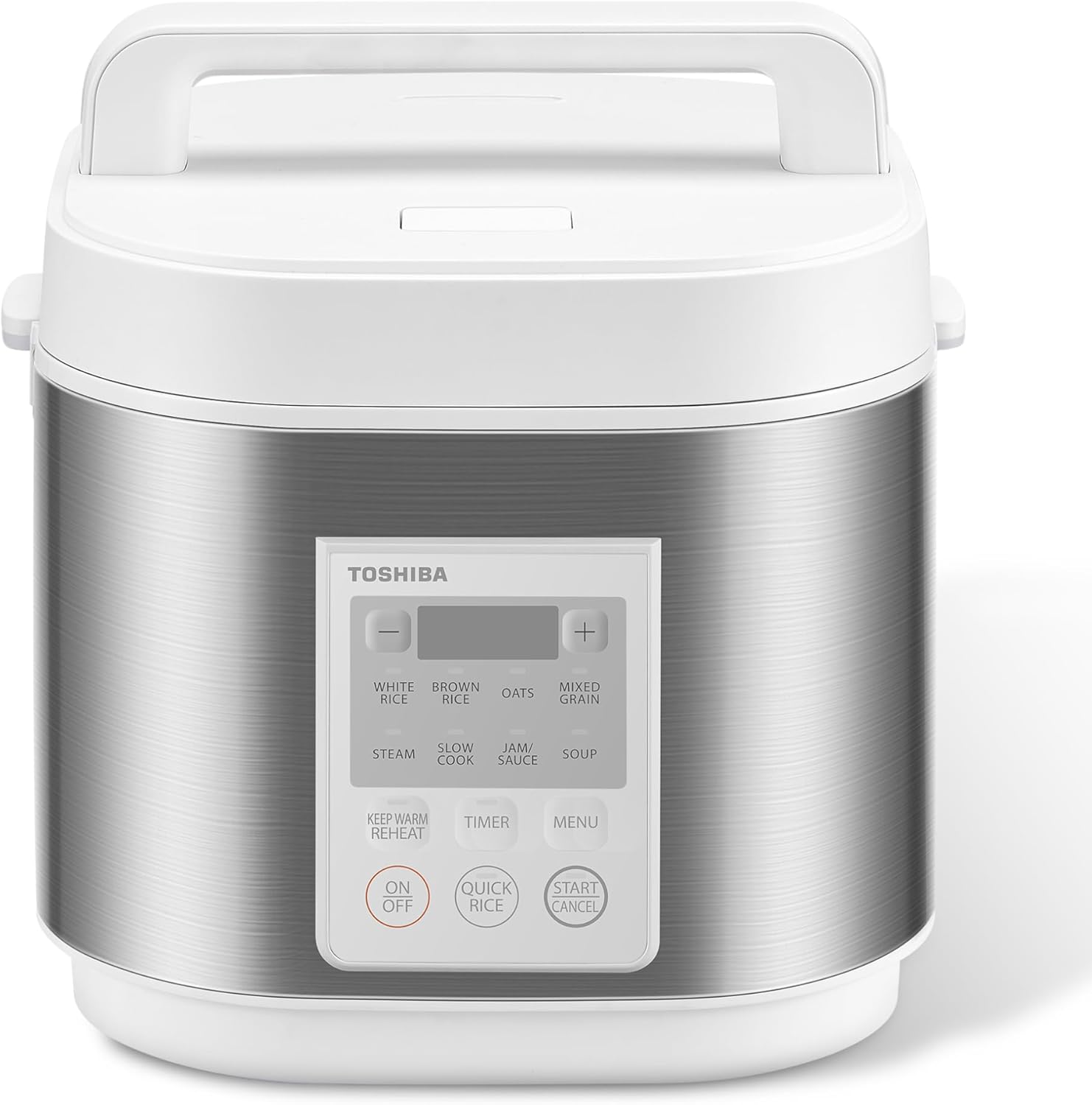
Toshiba 5.5 cup rice cooker keep warm troubleshooting is a practical search for family cooks troubleshooting one-touch rice cooker and steamer performance. The useful answer comes from matching the appliance to real batch sizes, controls, materials, cleaning, counter space, and the foods cooked most often rather than judging a rice cooker by one headline specification.
Keep-warm complaints can come from several different causes: the cook cycle may not have completed normally, the inner pot may not be seated correctly, the batch may be too small or dry, the lid or steam path may need cleaning, or the expected holding result may not match the model’s design. Troubleshoot in a fixed order instead of repeatedly changing rice and water. Always verify the exact model manual and current product listing when a fill line, ratio, program, timer, or care instruction differs from general guidance.
How To Evaluate Toshiba 5.5 Cup Rice Cooker Keep Warm Troubleshooting
Start by defining what success means for this Toshiba 5.5 cup rice cooker keep warm troubleshooting. For a review, that may be a useful batch size and manageable cleanup. For troubleshooting, it may be identifying the first point where normal operation changes. For a smart-cooker guide, it may be finding which modes genuinely save decisions in the weekly routine.
Use a controlled baseline whenever cooking performance is part of the question. Keep the rice variety, rinsing method, measuring cup, starting water, batch size, and selected program consistent. That makes it easier to tell whether a feature or setting actually changed the result.
Capacity language deserves special attention. Rice-cooker cups, cooked cups, uncooked cups, quarts, and liters are not interchangeable descriptions. Translate the specification into the dry batch and cooked portions the household uses instead of comparing numbers without context.
A Step-by-Step Toshiba Keep-Warm Diagnosis
Toshiba Steamer Basket Use
Use the on-site product reference to confirm the supplied accessories and how steaming fits the one-pot cooking setup. Check the exact model number, batch definition, accessory, or care instruction before transferring a conclusion from one cooker to another.
For this specific point, use toshiba steamer basket use as the reference. Keep that link tied to this decision only, then return to the manufacturer manual or current product listing for the final operating instruction.
Toshiba One Touch Rice Cooker
Use Toshiba’s official product information to confirm one-button operation, automatic keep warm, capacity, and care details for the model family. Check the exact model number, batch definition, accessory, or care instruction before transferring a conclusion from one cooker to another.
For this specific point, use toshiba one touch rice cooker as the reference. Keep that link tied to this decision only, then return to the manufacturer manual or current product listing for the final operating instruction.
Rice Cooker Warm Mode Diagnosis
Separate appliance troubleshooting from food safety; if the cooker cannot hold food safely, cool and refrigerate it rather than relying on an uncertain warm state. Check the exact model number, batch definition, accessory, or care instruction before transferring a conclusion from one cooker to another.
For this specific point, use rice cooker warm mode diagnosis as the reference. Keep that link tied to this decision only, then return to the manufacturer manual or current product listing for the final operating instruction.
Toshiba Nonstick Inner Pot Care
Inspect the inner pot for residue, damage, moisture on the exterior, and correct seating before assuming the electronics are at fault. Check the exact model number, batch definition, accessory, or care instruction before transferring a conclusion from one cooker to another.
For this specific point, use toshiba nonstick inner pot care as the reference. Keep that link tied to this decision only, then return to the manufacturer manual or current product listing for the final operating instruction.
5.5 Cup Cooker Troubleshooting Steps
Use a fixed sequence—power, pot seating, lid, steam path, batch, program, and result—so only one variable changes at a time. Check the exact model number, batch definition, accessory, or care instruction before transferring a conclusion from one cooker to another.
For this specific point, use 5.5 cup cooker troubleshooting steps as the reference. Keep that link tied to this decision only, then return to the manufacturer manual or current product listing for the final operating instruction.
Rice Steamer One Pot Meal Setup
Use the steaming guide to plan rice and vegetables together without overloading the cooker or blocking normal steam circulation. Check the exact model number, batch definition, accessory, or care instruction before transferring a conclusion from one cooker to another.
For this specific point, use rice steamer one pot meal setup as the reference. Keep that link tied to this decision only, then return to the manufacturer manual or current product listing for the final operating instruction.
Keep-Warm Symptom And Practical Check
Use this table as a controlled comparison framework. It separates the feature being checked from other variables that can make capacity, texture, timing, or cleanup appear better or worse.
| Check | Practical Focus | What To Verify |
|---|---|---|
| Rice dries quickly | Check batch size, lid and holding duration | Compare with manual guidance |
| Warm light not expected | Confirm cook cycle and control state | Restart only as instructed |
| Bottom becomes firm | Review ratio and long holding time | Fluff and serve earlier if appropriate |
| Steam meal affects rice | Check basket load and water | Keep within model limits |
A Repeatable Test And Setup Routine
Do the first setup when you are not rushed. Read the current manual, inspect the pot and lid, locate the measuring cup and fill lines, and note the starting ratio or program. A written baseline is more reliable than changing settings from memory after a disappointing batch.
Pre-Cook And Care Checklist
- Unplug and let the cooker cool before inspection
- Check the inner pot exterior is clean and dry
- Seat the pot flat on the heating surface
- Inspect lid and steam path
- Use the correct measuring cup
- Run a normal white-rice baseline batch
- Observe the transition to keep warm
- Record time and texture before changing variables
Common Mistakes To Avoid
- Treating a food-safety question as only an appliance-quality problem.
- Running repeated cycles without checking whether the inner pot and lid are seated correctly.
- Using abrasive tools on a nonstick pot during troubleshooting.
- Changing water, batch size, rice type, and steaming load all at once.
If the result is inconsistent, return to the simplest supported batch instead of stacking multiple corrections. One measured change is easier to evaluate than a new rice, new ratio, new program, and different resting time in the same test.
Manual, Food Safety, And Care Reference
The appliance manual is the authority for electrical safety, maximum fill, supplied measuring cup, approved foods, timer behavior, pot handling, and cleaning. Manufacturer webpages can help identify current features, but model-specific documentation takes priority when details differ.
For keep warm, delayed serving, leftovers, or meal prep, follow the appliance directions and appropriate food-safety practices for hot holding, cooling, refrigeration, and reheating.
Conclusion
The strongest conclusion from a Toshiba 5.5 cup rice cooker keep warm troubleshooting comes from matching the cooker to a normal week rather than an idealized maximum. Capacity, modes, pot material, cleaning, timing, and counter space matter only to the extent that they improve the meals actually cooked.
Use the exact product documentation, test a repeatable batch, and choose the simpler option when extra capacity or programs do not solve a real need. That approach makes reviews and comparisons more useful than a feature-count ranking.
Frequently Asked Questions
Why does rice get dry on keep warm?
Long holding, a small batch, water ratio, lid sealing, or the cooker’s normal holding profile can all contribute. Compare a fresh baseline batch with the manual.
Should the Toshiba switch to keep warm automatically?
The current Toshiba one-touch product information states automatic keep warm after cooking; confirm the exact model and control state in its manual.
Can a damaged nonstick pot affect performance?
A warped, damaged, or poorly seated pot can affect heat transfer. Stop using damaged cookware when the manufacturer instructs replacement.
Can I troubleshoot with the steamer basket installed?
For a clean baseline, test plain rice first. Add the steamer only after the standard rice cycle behaves as expected.
When should I stop troubleshooting and seek service?
Stop if there are electrical smells, damaged cords, abnormal heating, error states you cannot clear, or behavior that contradicts the manual. Use manufacturer support rather than opening the appliance.
